


Permanent Marker THCA Flower


Cereal Milk THCA Flower

Tangie Haze THCA Flower


Super Sour Diesel THCA Flower
How to Read Lab Results (COA): What the Numbers Mean
Key Takeaways
- COA stands for Certificate of Analysis – third-party lab verification
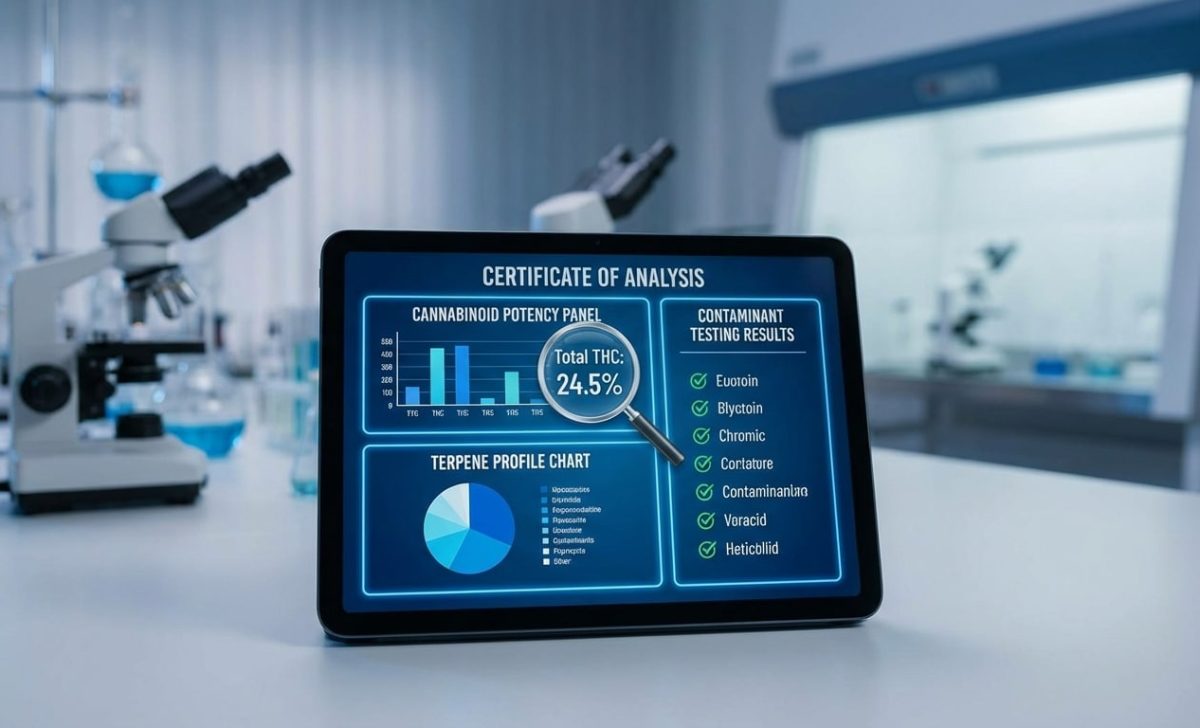
- Key sections: cannabinoid potency, terpene profile, contaminant testing
- Total THC calculation: THCA × 0.877 + Delta-9 THC
- Look for accredited labs (ISO 17025 certification)
- Contaminant testing should show “ND” (not detected) or “Pass”
- Batch numbers should match between product and COA
What Is a COA?
A Certificate of Analysis (COA) is a document from an independent laboratory that verifies what is actually in a cannabis product. It is your proof that a product contains what the label claims and is free from harmful contaminants.
Reputable companies like Fresh Bros publish COAs for all products, allowing customers to verify quality before purchasing.
Why COAs Matter
- Potency verification: Confirms actual THCA/THC percentages
- Safety assurance: Screens for pesticides, heavy metals, mold
- Legal compliance: Verifies Delta-9 THC is below 0.3% (federal hemp limit)
- Consumer protection: Prevents mislabeled or contaminated products
Key Elements of a Valid COA
- Laboratory name and accreditation information
- Date of testing
- Batch/lot number matching the product
- Sample identification
- Testing methodology
- Results with units and detection limits
According to FDA guidance, third-party testing is essential for consumer safety in the hemp industry.
Understanding Cannabinoid Potency
The Cannabinoid Panel
Most COAs test for multiple cannabinoids. Here is what to look for:
| Cannabinoid | What It Means | Typical Range (Flower) |
|---|---|---|
| THCA | Primary active compound (converts to THC when heated) | 15-30% |
| Delta-9 THC | Psychoactive THC; must be under 0.3% for legal hemp | <0.3% |
| Total THC | THCA × 0.877 + Delta-9 THC (potential THC after decarb) | 13-26% |
| CBD | Non-psychoactive cannabinoid | 0-1% in THCA flower |
| CBG | Minor cannabinoid, non-psychoactive | 0-2% |
| CBC | Minor cannabinoid | 0-1% |
The Total THC Calculation
This is the most important number for understanding potency and legal compliance:
Total THC = (THCA × 0.877) + Delta-9 THC
The 0.877 factor accounts for the molecular weight lost when THCA converts to THC through decarboxylation.
Example Reading
If a COA shows:
- THCA: 25.5%
- Delta-9 THC: 0.25%
Total THC = (25.5 × 0.877) + 0.25 = 22.61%
This tells you the flower will produce approximately 22.61% THC when smoked or vaped.
Reading Terpene Profiles
Terpenes are aromatic compounds that contribute to flavor, aroma, and effects. Many COAs include detailed terpene analysis.
Common Terpenes and Their Characteristics
| Terpene | Aroma | Common Effects |
|---|---|---|
| Myrcene | Earthy, musky, herbal | Relaxation, sedation |
| Limonene | Citrus, lemon | Mood elevation, energy |
| Pinene | Pine, forest | Alertness, focus |
| Caryophyllene | Spicy, peppery | Potential anti-inflammatory |
| Linalool | Floral, lavender | Calming, relaxation |
| Humulene | Hoppy, earthy | Appetite suppression |
How to Use Terpene Data
- Myrcene-dominant: Expect relaxing, indica-like effects
- Limonene/Pinene-dominant: Expect uplifting, sativa-like effects
- Balanced profile: Hybrid effects
Total terpene content typically ranges from 1-4% in quality flower. Higher is generally better for flavor and entourage effect.
Contaminant Testing Explained
Safety testing is arguably more important than potency testing. A complete COA should include multiple contaminant panels.
Pesticide Testing
Screens for common agricultural pesticides. Results should show:
- “ND” (Not Detected): Ideal result
- “Pass”: Below action levels
- Specific values: Should be well below limits
Heavy Metals Testing
Tests for toxic metals including:
- Lead (Pb)
- Arsenic (As)
- Cadmium (Cd)
- Mercury (Hg)
All should show “ND” or “Pass” with values well below regulatory limits.
Microbial Testing
Screens for harmful microorganisms:
- Total Yeast and Mold: Should be below limits (typically under 10,000 CFU/g)
- E. coli: Should be “Not Detected”
- Salmonella: Should be “Not Detected”
- Aspergillus: Should be “Not Detected”
Residual Solvents (For Concentrates)
Tests for leftover extraction chemicals. Important for concentrates, less relevant for flower.
Mycotoxins
Toxic compounds produced by mold. Should always show “ND” or “Pass.”
Red Flags to Watch For
Signs of Unreliable COAs
- No lab name or accreditation: Cannot verify testing legitimacy
- Missing batch numbers: Cannot match COA to specific product
- Old test dates: Should be within 12 months, ideally 6
- No contaminant testing: Only potency tested = incomplete
- Unrealistic potency: Flower claiming 40%+ THCA is likely inflated
- Edited documents: Signs of image manipulation
Verifying COA Authenticity
- Check that the lab exists and is accredited (ISO 17025)
- Confirm batch number matches product packaging
- Look up the lab’s website for verification tools
- Compare multiple products from same company for consistency
Trusted brands like Fresh Bros use accredited third-party labs and provide easily accessible COAs for every batch.
Shop Lab-Tested THCA Flower
Every Fresh Bros product includes complete third-party lab testing. View our COA database to verify quality before you buy.
Frequently Asked Questions
What does COA stand for?
COA stands for Certificate of Analysis. It is a document from an independent laboratory that verifies the contents and safety of a cannabis product. COAs typically include cannabinoid potency, terpene profiles, and contaminant testing results.
How do I calculate Total THC from a COA?
Total THC is calculated using the formula: (THCA × 0.877) + Delta-9 THC. The 0.877 factor accounts for weight lost during decarboxylation. For example, flower with 25% THCA and 0.2% Delta-9 THC has a Total THC of approximately 22.1%.
What does ND mean on a COA?
ND stands for “Not Detected,” meaning the tested substance was not found above the laboratory’s detection limit. For contaminant testing (pesticides, heavy metals, mold), ND is the ideal result, indicating the product is free from that particular contaminant.
How do I verify if a COA is legitimate?
To verify a COA: Check that the laboratory exists and holds ISO 17025 accreditation. Confirm the batch number matches your product packaging. Look for a complete test date within the past 12 months. Many labs offer online verification tools where you can enter the sample ID to confirm results.
Why is Delta-9 THC important on a hemp COA?
Delta-9 THC must be below 0.3% for a cannabis product to qualify as legal hemp under the 2018 Farm Bill. This threshold is the legal distinction between hemp and marijuana. Always check that Delta-9 THC is below 0.3% to ensure the product is federally compliant.
Should I trust products without a COA?
Products without accessible COAs should be avoided. Without third-party testing, you cannot verify potency claims, legal compliance, or safety from contaminants. Reputable companies always provide COAs for their products. If a company cannot or will not share lab results, consider it a major red flag.


